菜单



立即预约

英 / 中


远程问诊

立即咨询

SPOT-MAS is a non-invasive multi-cancer early detection (MCED) blood test that looks for circulating tumour DNA (ctDNA) in your blood.
Cancer cells release tiny pieces of their DNA (ctDNA) into the bloodstream, and this test is designed to find them.
Using sensitive laboratory methods and computer analysis, the technology works like a "liquid biopsy" to search for cancer-type changes in this DNA.
When such changes are found, it suggests that cancer may be present and can give clues about the possible cancery type, helping your doctor decide on the next tests and treatment plan.


Gets diagnosed with Cancer in their lifetime. 1

Diagnosed with Cancer every day in Singapore

There is a misconception that cancer diagnosis inevitably leads to death. However, this perception is often due to late-stage detection instead of ineffective treatment options.

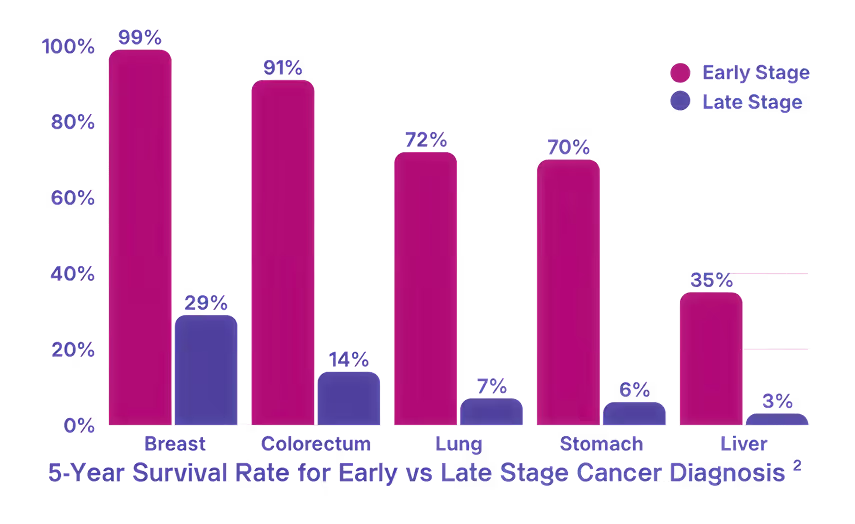
In Singapore, national population screening is recommended for breast, colorectal, lung and cervical cancer, with starting ages chosen to balance benefit, harms, and cost-effectiveness.
For individuals aged 50 and above, one of the following screening options is recommended:



Multi-cancer early detection (MCED) tests are designed to work alongside Singapore's national cancer screening programmes, providing a simple blood-based option in addition to the recommended screenings listed above.
Because many serious cancers do not have routine screening and are often diagnosed at a late stage, MCED technology looks for cancer-related signals from multiple organs using a single, non-invasive blood draw, helping to identify cancers that currently lack established screening tests.
SPOT-MAS is a non-invasive multi-cancer early detection (MCED) blood test that looks for circulating tumour DNA (ctDNA) in your blood.
Cancer cells release tiny pieces of their DNA (ctDNA) into the bloodstream, and this test is designed to find them.
Using sensitive laboratory methods and computer analysis, the technology works like a "liquid biopsy" to search for cancer-type changes in this DNA.
When such changes are found, it suggests that cancer may be present and can give clues about the possible cancery type, helping your doctor decide on the next tests and treatment plan.
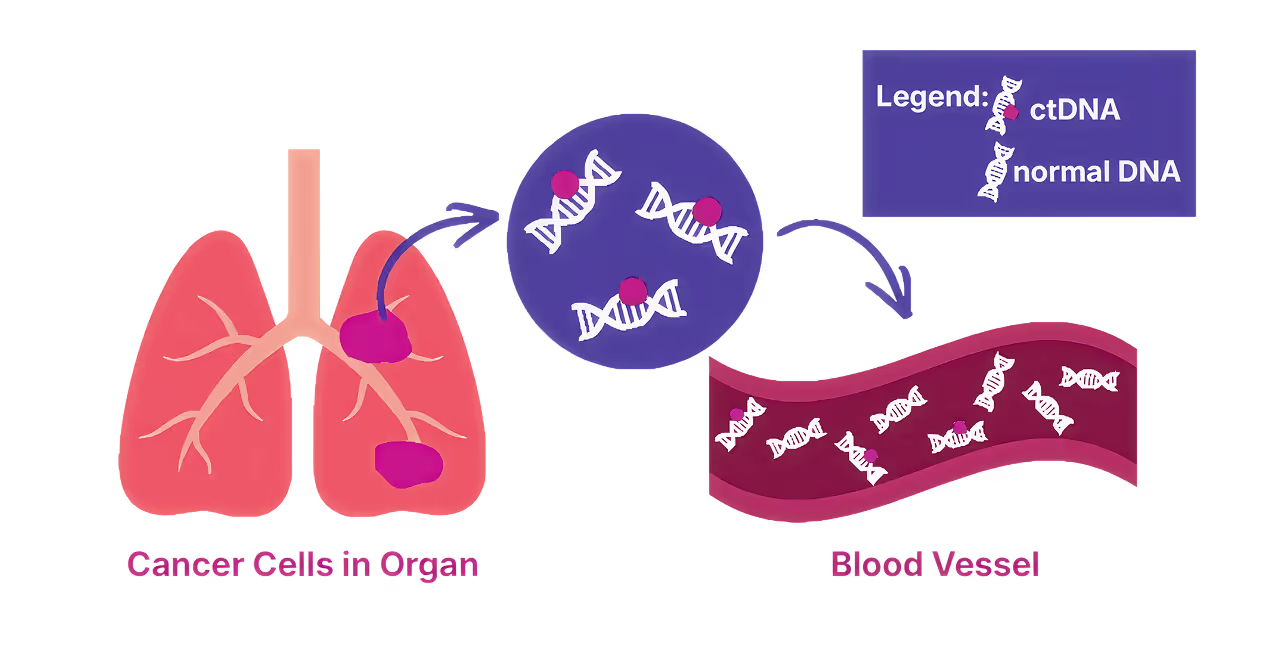
Only one tube of blood is needed.
High specificity limits false positive and unnecessary work-up.
Potential to identify cancer signals early.
Capability to screen for cancers that lack established screening methods giving added peace of mind.

clinical validation trial in Asia8
participants
for next generation sequencing of your blood sample based in Singapore
*College of American Pathologists
Featured in:
European Society for Medical Oncology Asia 2023 & 2024
American Society of Clinical Oncology Breakthrough 2023
>15 peer reviewed international biomedical journal articles (eLife, Nature publications, etc.)


Results gathered from Asia's largest prospective multicenter MCED cohort study involving 9,024 participants across 75 major hospitals.
years old
Older people are at a higher risk of cancer9

Cancer Incidence By Age in Asia from 1990-2019.9
years old










临床评估
血液检查
尿液检查
心脏筛查
细胞学检查
影像检查

临床评估
血液检查
尿液检查
粪便检查
心脏筛查
细胞学检查
影像检查

临床评估
血液检查
尿液检查
粪便检查
心脏筛查
细胞学检查
影像检查
另选2项

临床评估
血液检查
尿液检查
粪便检查
心脏筛查
细胞学检查
影像检查
另选3项
内窥镜检查