


菜单



立即预约

英 / 中


远程问诊

立即咨询
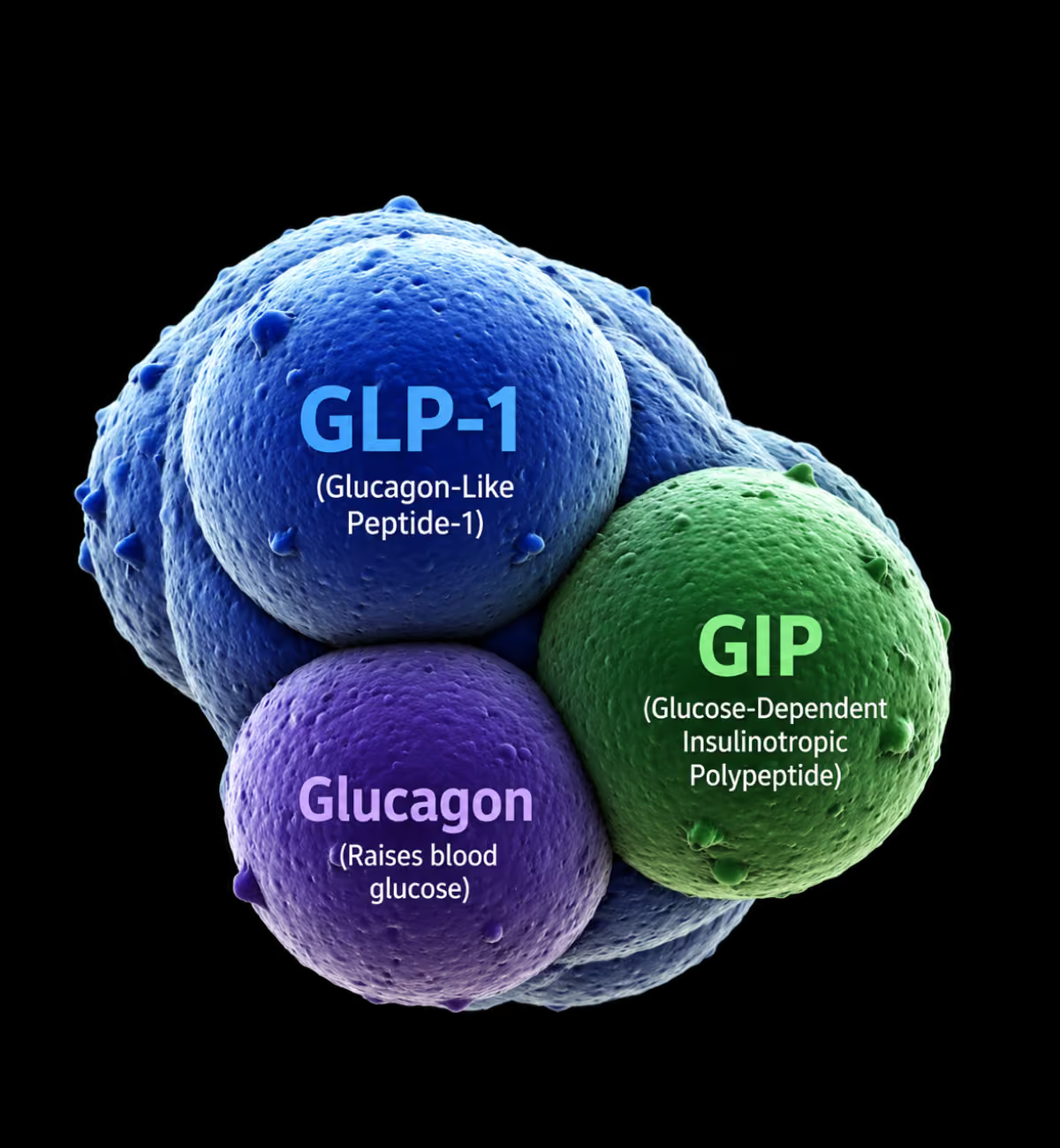
Retatrutide is an investigational triple-hormone receptor agonist that acts on three receptor pathways at once: GLP-1, GIP, and glucagon. These pathways influence appetite, blood sugar, energy expenditure, and gastric emptying. Clinical studies have shown substantial weight loss with retatrutide compared to earlier medications.
Half-life is the amount of time it takes for the concentration of a medication in the body to reduce by half. For example, starting with 100 units, 50 units remain after one half-life, and 25 remain after a second half-life.
Current clinical data suggests the retatrutide half-life is approximately 6 days, allowing the medication to remain active between weekly injections with sustained appetite suppression and stable blood levels.
The long half-life is what makes weekly administration possible — the extended duration allows levels to stay elevated throughout the week, supporting consistent hunger control and smoother metabolic regulation.
在整个治疗过程中,医疗监督是必要的,以确保患者的安全和治疗的有效性。
Medications typically reach steady state after approximately 4 to 5 half-lives. With a 6-day half-life (4 × 6 = 24), stable circulating levels may develop after about 24 days of consistent dosing.
The long half-life may support continuous appetite reduction, stable calorie reduction, fewer hunger spikes, sustained receptor activation, and reduced fluctuations between doses — compared to shorter-acting medications that can produce more pronounced peaks and crashes.
Yes. Because retatrutide remains in the body longer, side effects may also persist longer after a dose adjustment, which is one reason dose escalation is often done gradually.
(No specific prevalence data is given for these.)
Individual responses can vary depending on body size, kidney function, liver function, metabolic rate, injection timing, and dose size — some individuals may clear the medication slightly faster or slower than others.
Yes. Because weekly injections occur before the medication has fully cleared, concentrations can gradually accumulate over time, contributing to steady therapeutic levels.
Because of the long half-life, levels decline gradually rather than immediately — some activity may continue for days after a missed injection. However, repeated missed doses may eventually reduce effectiveness.
Retatrutide's half-life is similar to other modern, weekly incretin-based therapies. Older medications with shorter durations required daily injections and produced larger blood level fluctuations.
A longer half-life reduces treatment burden through fewer injections and more stable blood levels. A weekly routine may feel easier to maintain, which can support long-term consistency.
Retatrutide remains investigational and is still undergoing clinical evaluation. Long-acting medications require careful dose escalation, ongoing monitoring, and attention to side effects, with medical oversight recommended. Effects cannot be immediately reversed once a dose has been injected.
The 6-day half-life is what enables retatrutide's weekly dosing, stable blood levels, ongoing appetite suppression, and gradual concentration buildup. Proper dosing and medical supervision remain important, and consultation with a qualified healthcare professional is recommended.


